


Thinking about pursuing a psychology degree? You are definitely not alone. Every year, thousands of students explore psychology to understand human behaviour, help others navigate emotional challenges, or simply uncover the mysteries of the mind. But before you commit, there are several essential insights that can guide your expectations, save time, and help you make smarter career choices.
In this guide, we break down ten crucial things you should know before deciding whether a psychology degree is the right path for you. We’ll also highlight opportunities offered by institutions like SIM Global Education (SIM GE), a top education provider in Singapore, so you can see how modern programmes prepare students for both local and global opportunities.
1. You Will Study Much More Than “Why People Do What They Do”
You might imagine psychology as endless discussions about emotions, motivations, personalities, and relationships. While these topics absolutely appear in your studies, a psychology degree goes deeper — sometimes much deeper than you might expect.
You’ll explore areas like cognitive processes, neuroscience foundations, memory structures, perception mechanisms, and developmental changes across the lifespan. Psychology is both a scientific discipline and an applied field, which means you’re constantly balancing theory with research-based evidence.
For instance, courses at institutions like SIM Global Education in Singapore combine foundational knowledge with real-world applications. Students may examine how cognitive biases affect decision-making in corporate environments or how childhood development impacts social behavior later in life.
In many modules, you will break down real-world cases. You might analyse how childhood trauma affects adult behaviour, or how brain injuries change personality. At times, the content can be emotionally intense — but also incredibly rewarding. You’ll learn to think critically about human experience, applying both qualitative and quantitative methods to assess complex phenomena.
2. Research and Statistics Will Become Your Close Companions
Before you get too comfortable imagining yourself listening to people’s stories all day, here’s a truth you should know: psychology is research-heavy. From your first year, you will learn statistics, experimental design, data interpretation, and academic writing. This is because the entire field depends on scientific evidence.
Psychology is not about giving advice based on “gut feeling”; it’s about understanding what decades of research have uncovered. That’s why you’ll work with tools like SPSS or other statistical software to make sense of data.
| Research Skill | Why It Matters | Real Example |
|---|---|---|
| Statistics | Helps you analyse behavioural data accurately. | Determining whether a therapy method is truly effective. |
| Experimental Design | Ensures findings are valid and reliable. | Setting up studies on stress management techniques. |
| Qualitative Analysis | Explores attitudes and lived experiences. | Interviewing participants about workplace burnout. |
If you’re not naturally drawn to numbers, don’t worry — most students adapt with practice. But it’s good to prepare yourself mentally because research is a core pillar of the entire degree. Programs like SIM GE’s also emphasise hands-on research experience, letting students conduct surveys, design experiments, and even publish findings in local journals, which adds both depth and credibility to your training.
3. A Psychology Degree Offers Many Career Paths — Not Just “Psychologist”
You might be surprised by how many directions a psychology degree can take you. While many students dream of becoming a clinical psychologist, the pathway to that role is long, specialised, and competitive. But here’s the good news: a psychology degree opens many doors that you might not have considered.
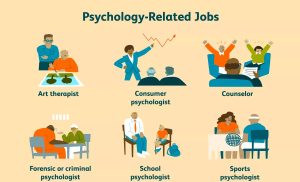
You will find graduates working in education, healthcare, HR, social services, marketing, public relations, UX design, research, community work, and organisational development. Because psychologists study human behaviour, employers value their ability to analyse problems, communicate effectively, and resolve interpersonal issues.
| Career Area | How a Psychology Degree Helps | Typical Job Role |
|---|---|---|
| Human Resources | Understanding employee behaviour and motivation. | HR Specialist, Recruitment Executive |
| Healthcare Support | Knowledge of mental health and assessment tools. | Mental Health Assistant, Caseworker |
| Marketing & UX | Insight into decision-making and perception. | UX Analyst, Consumer Researcher |
Notably, SIM GE psychology graduates in Singapore are trained to meet the country’s rising mental health needs. Graduates often assist schools, workplaces, and healthcare settings by applying scientific principles with empathy to foster emotional well-being.
4. Becoming a Licensed Psychologist Requires Further Study
If your long-term goal is to become a professional psychologist, you’ll need more than just an undergraduate psychology degree. In most countries, you will require at least a master’s degree, and in some cases, a doctorate. Singapore, for instance, plans to increase the number of public-sector psychologists by 40% by 2030, highlighting the demand for well-trained professionals with advanced qualifications}.
This pathway may sound long, but it ensures that you are well-equipped to handle sensitive mental health situations. While this may feel intimidating at first, many students find that each stage helps them grow in clarity and confidence. Internships, case studies, and applied projects during undergraduate studies provide an early preview of professional responsibilities.
5. You Will Learn to Think Critically — Sometimes Uncomfortably So
One of the biggest transformations you’ll go through is learning to question assumptions, challenge stereotypes, and examine behaviour through multiple lenses. You will study controversial experiments, ethical dilemmas, and cultural influences. You might even realise that some of your long-held beliefs don’t hold up to scientific scrutiny.
This growth is powerful. It sharpens your decision-making and makes you a more thoughtful, compassionate person. It also extends to your understanding of society. For example, Singapore-focused courses often incorporate studies on workplace stress and cultural factors affecting mental health, connecting global theories to local realities.
6. Psychology Assignments Are More Writing-Heavy Than You Expect
You’ll write essays, reflection papers, case study analyses, research reports, and critique papers. Writing becomes a tool for thinking — and thinking becomes a muscle you’ll strengthen through writing. By your final year, you’ll likely produce a research project or thesis that demands both independence and discipline.
Assignments are designed to simulate professional documentation standards. For example, you may need to prepare reports that could resemble real clinical assessments, policy briefs, or community program proposals. This kind of practice prepares you not only academically but also professionally.
7. You Will Work With Real People — and That Requires Real Responsibility
As you progress, you might participate in internships, research interviews, or field placements where you interact with real individuals. These can range from children to older adults, employees facing stress, or community members seeking support. You’ll learn to listen, observe, and respond with empathy.
For instance, students at SIM GE assist with school counselling programs and workplace mental health initiatives, where practical experience blends with evidence-based training. Ethical handling of sensitive information and professional communication is a critical learning outcome at this stage.
8. The Field of Psychology Is Constantly Evolving
New discoveries emerge every year. Whether it’s advances in neuroscience, updated therapy frameworks, or new insights into mental health trends, your learning doesn’t stop after graduation. Programs at SIM GE, for example, integrate research updates and industry trends into coursework to keep students aligned with global developments.
9. Teamwork and Communication Matter More Than You Think
Psychology might sound like a solitary path, but in reality, you will collaborate often. Group projects, research teams, presentations, and discussions are a big part of your experience. You’ll learn to express complex ideas in clear, relatable language — a skill that becomes invaluable no matter which career path you choose.
Collaborative projects also include cross-cultural perspectives, as many Singapore programs have a diverse student body, enhancing your ability to work in international and multicultural settings
10. A Psychology Degree Can Change How You Understand People — Including Yourself
Many students say that studying psychology reshapes the way they view themselves, their habits, their relationships, and their own emotional patterns. You’ll learn about stress, resilience, motivation, attachment, memory, and behaviour — all of which apply directly to your everyday life.
Understanding why you think, react, or communicate the way you do can be surprisingly liberating. Beyond personal insights, such understanding enhances your ability to support others, making you more empathetic and effective in professional and personal settings.
Comparison: Psychology Degree vs Related Degrees
If you’re still unsure whether a psychology degree is your best match, here’s a quick comparison to help you decide:
| Degree | Focus | Best For |
|---|---|---|
| Psychology | Understanding human behaviour, cognition, emotion. | People-oriented learners exploring mental processes. |
| Social Work | Community support, social welfare systems. | Students who want hands-on community engagement. |
| Sociology | Social structures and group dynamics. | Students interested in societal-level analysis. |
Frequently Asked Questions
1. What should you prepare for before starting a psychology degree?
You should prepare for research-heavy coursework, academic writing, and modules that explore complex human behaviour. It also helps to build basic familiarity with statistics and scientific reading. Programs with applied experiences, such as internships or case studies, are particularly useful to get a practical sense of your future career path.
2. Can you become a psychologist with just a psychology degree?
You generally cannot become a licensed psychologist with only an undergraduate degree. Additional postgraduate training is required, including supervised practice, advanced assessments, and professional accreditation, which ensures competence in real-world mental health interventions.
3. What careers can you pursue if you don’t plan to become a psychologist?
You can work in HR, organisational development, community services, education, healthcare support roles, UX research, market research, customer insights, and case management roles. Many graduates also work in program development or policy research, applying psychological knowledge to social issues.
4. Is a psychology degree suitable if you’re not good with numbers?
Yes, as long as you’re willing to practise and learn. Statistical skills improve gradually, and many students without a strong math background do well with consistent effort. Additionally, programs often provide tutorials, workshops, and hands-on projects to make research concepts accessible.
5. How do you know if a psychology degree is right for you?
If you’re curious about why people think or behave the way they do, enjoy research-based learning, and want a degree with versatile career options, psychology may be a great fit. Consider your interest in both the theoretical and applied aspects of human behaviour, and whether you enjoy projects and group collaboration.
Final Thoughts
A psychology degree is not just an academic qualification — it’s a journey that reshapes how you understand people, relationships, and even yourself. Whether you plan to enter the mental health field or branch into other behavioural-focused careers, the skills you gain will stay relevant for life.
If you approach the degree with curiosity, discipline, and openness, you will find it to be one of the most enriching choices you can make. With practical experiences, global exposure, and a curriculum aligned with emerging mental health needs in Singapore, programs such as SIM GE’s offer students the unique opportunity to develop both knowledge and empathy, positioning them for meaningful, impactful careers.
References
- SIM Global Education. (2023). Graduate Employment Survey. Singapore Institute of Management. Retrieved from https://www.sim.edu.sg/articles-inspirations/how-sim-diverse-degree-options-enhance-your-journey-to-study-psychology-in-singapore
- Milieu Insight (MILI). (2024). Singapore’s workforce has the poorest mental health, job satisfaction, and quality of life in the region: New study finds. Retrieved from https://www.mili.eu/sg/insights/singapores-workforce-has-the-poorest-mental-health-job-satisfaction-and-quality-of-life-in-the-region-new-study-finds
- Channel News Asia. (2024, February 7). Singapore to increase number of psychologists in public sector to meet mental health demand. Retrieved from https://www.channelnewsasia.com/singapore/mental-health-parliament-psychologists-frontline-staff-training-moh-4106171
- Top Universities. (n.d.). Singapore Institute of Management. Retrieved from https://www.topuniversities.com/universities/singapore-institute-management
- Singapore Institute of Management (SIM). (n.d.). Bachelor of Arts (Psychology). Retrieved October 2025, from https://www.sim.edu.sg/degrees-diplomas/programmes/programme-listing/bachelor-of-arts-psychology

Leave a Reply